Don't let fragmented data sink your AI investment before it starts. For fast-growing F&B distributors, dairy companies, and frozen food brands, a connected data foundation is what turns supply chain AI from a dashboard novelty into a tool that actually protects margin.
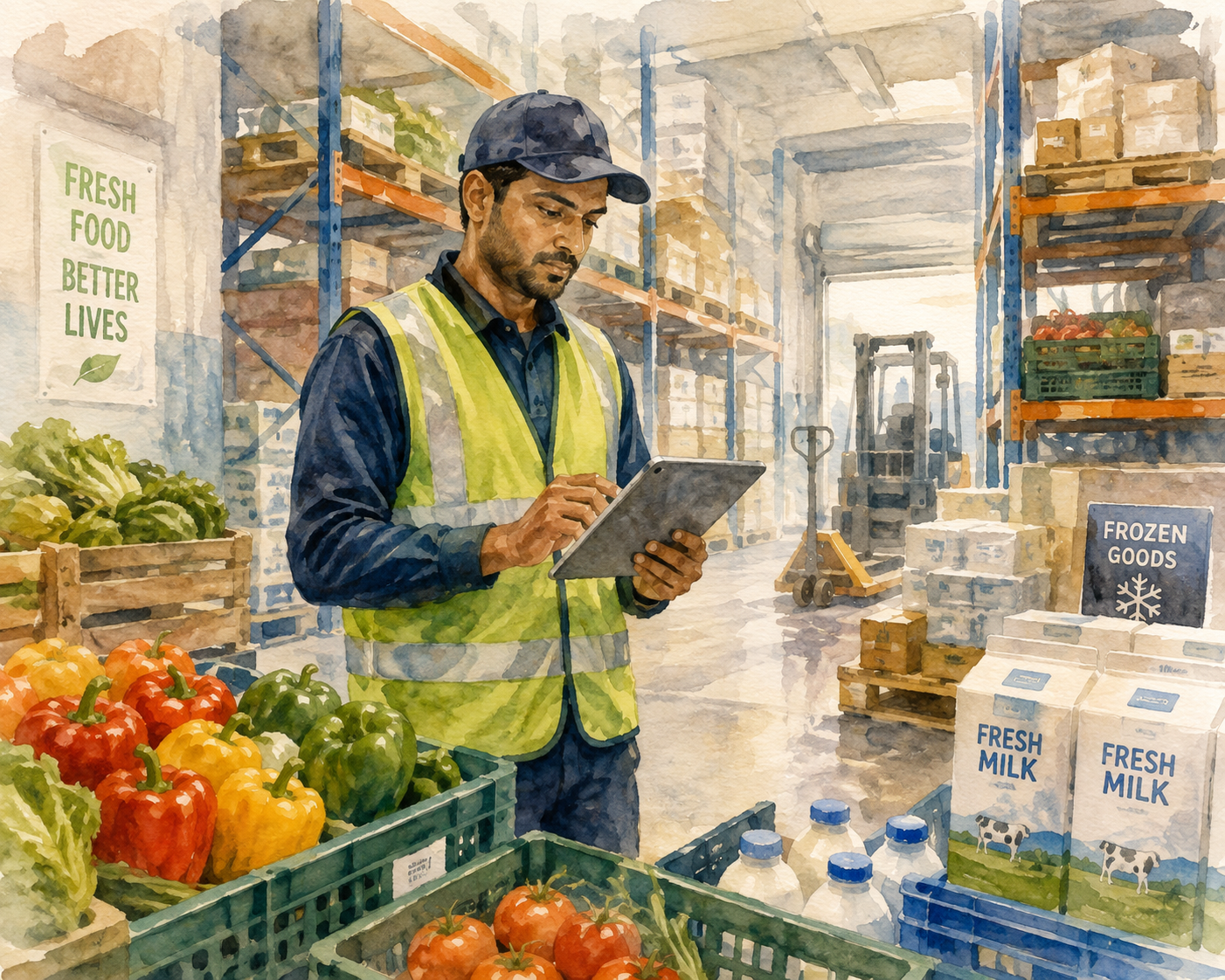
- In food and beverage, fragmented data doesn't just mean bad forecasts. It means spoilage, missed delivery windows, and stockouts on your fastest-moving SKUs.
- Dairy and frozen food add extra failure points: cold chain breaks, freeze-thaw risk, and shelf lives measured in days, not months.
- ERPs, WMS platforms, distributor spreadsheets, and POS feeds all describe the same business, but rarely agree with each other.
- A bridged, real-time view across these sources is what lets AI account for shelf life, batch age, and in-transit risk, not just historical sales.
Key takeaways
Buying AI tools before fixing the underlying data is the most common reason F&B companies don't see ROI supply chain AI.
The AI rush, and the gap underneath it
Every growing F&B brand, distributor, dairy company, or frozen food operator is hearing the same pitch right now: add AI to your supply chain and you'll forecast better, waste less, and move faster. Most act on it by buying a forecasting tool or bolting a copilot onto an existing dashboard.
The tool isn't the problem. What it's being asked to read usually is.
AI models are only as good as the data context they're given. For a company selling shelf-stable electronics or apparel, a slightly stale inventory number is an inconvenience. For a company moving dairy, frozen goods, produce, or anything else with a short shelf life, that same gap between what the system shows and what's actually happening on the shelf, in the cold store, or in the truck is the difference between a sale and a write-off.
Why F&B supply chains break the "just add AI" playbook
Fast-scaling F&B businesses, whether they're pure distributors, dairy processors, or frozen food brands, run on more moving data sources than most industries realize:
- ERP or accounting system for purchase orders, invoicing, and financial close
- Warehouse management system for stock levels, batch numbers, and locations
- Distributor and retailer spreadsheets for last-mile sell-through, often updated manually
- POS or sales data from the outlets actually moving product
- Cold chain and IoT sensors, where they exist, tracking temperature, freeze-thaw events, and time in transit
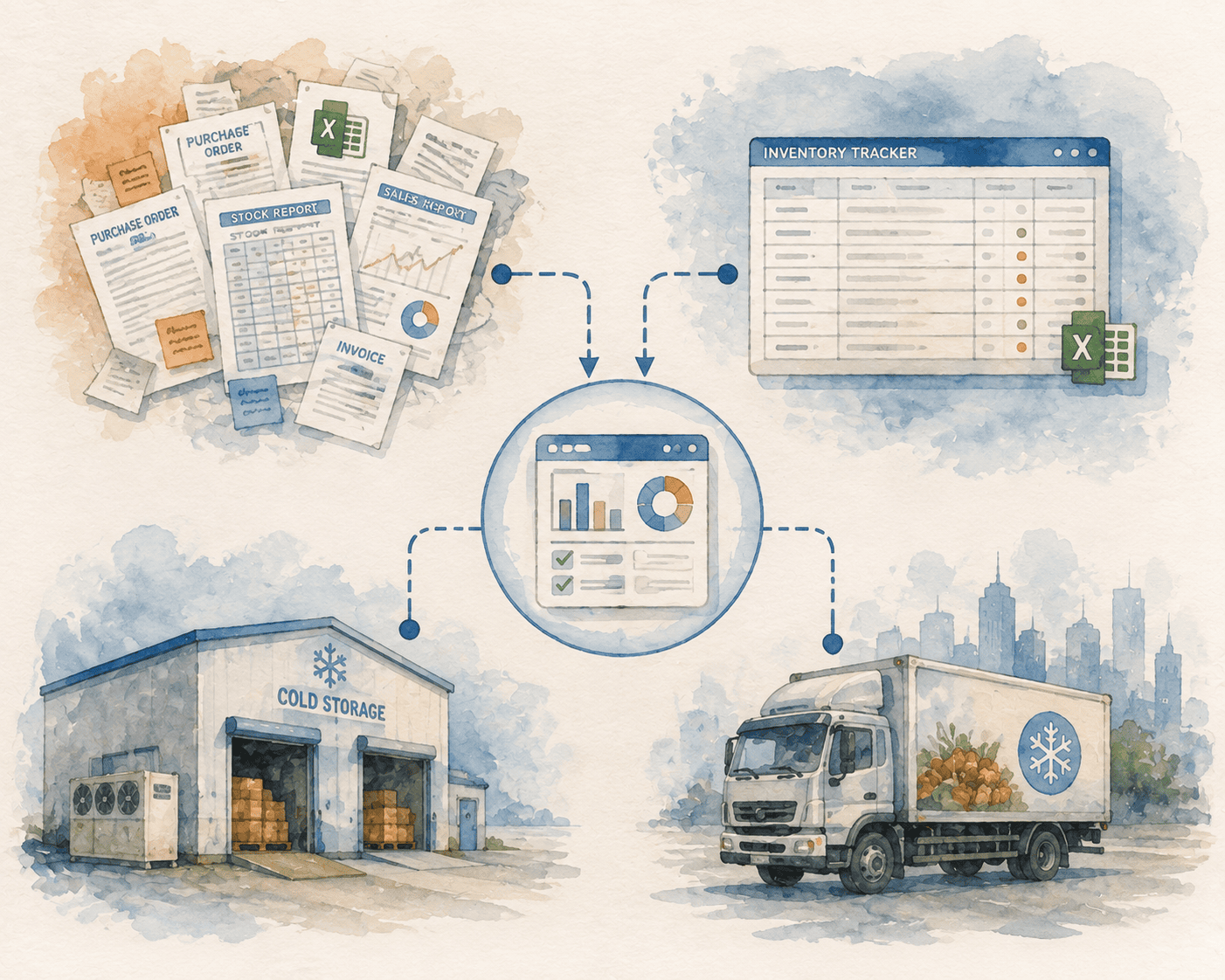
None of these systems were built to talk to each other. Each one holds a partial, time-lagged version of the truth. A distributor's spreadsheet might say a batch sold through on Tuesday; the WMS might not reflect that until the next stock count; the ERP won't see it until invoicing catches up. AI layered on top of any single one of these sources inherits its blind spots and reports them back with a confidence score attached.
For dairy and frozen food specifically, the stakes are higher still. A cold chain break that isn't logged anywhere becomes a spoiled batch the system still counts as sellable stock. A frozen SKU sitting one extra day at a hub because of a routing gap can mean a quality claim before it even reaches a retailer. Forecasting and replenishment models that don't see any of this aren't wrong about the data they were given. They just never saw the part of the picture that mattered.
What a bridged data foundation actually looks like
The fix isn't a bigger model. It's connecting the sources that already exist into one live picture, without ripping out the systems teams already rely on.
In practice, that means:
- Pulling stock, batch, and expiry data out of the WMS and ERP into a shared layer, so age and shelf life are visible alongside quantity
- Structuring the messy inputs distribution and dairy teams already generate, spreadsheets, WhatsApp updates, manual counts, instead of asking the business to change how it works first
- Bringing cold chain and IoT data into the same view for frozen and dairy operations, so temperature excursions and freeze-thaw events show up as inventory risk, not a separate report nobody checks
- Matching proof-of-delivery and in-transit data to what the warehouse thinks is on the shelf, so damage, shortfall, and delay show up as they happen, not at month-end reconciliation
- Feeding all of it, structured and current, to the forecasting or replenishment layer so recommendations account for what's actually moving and what's actually about to expire
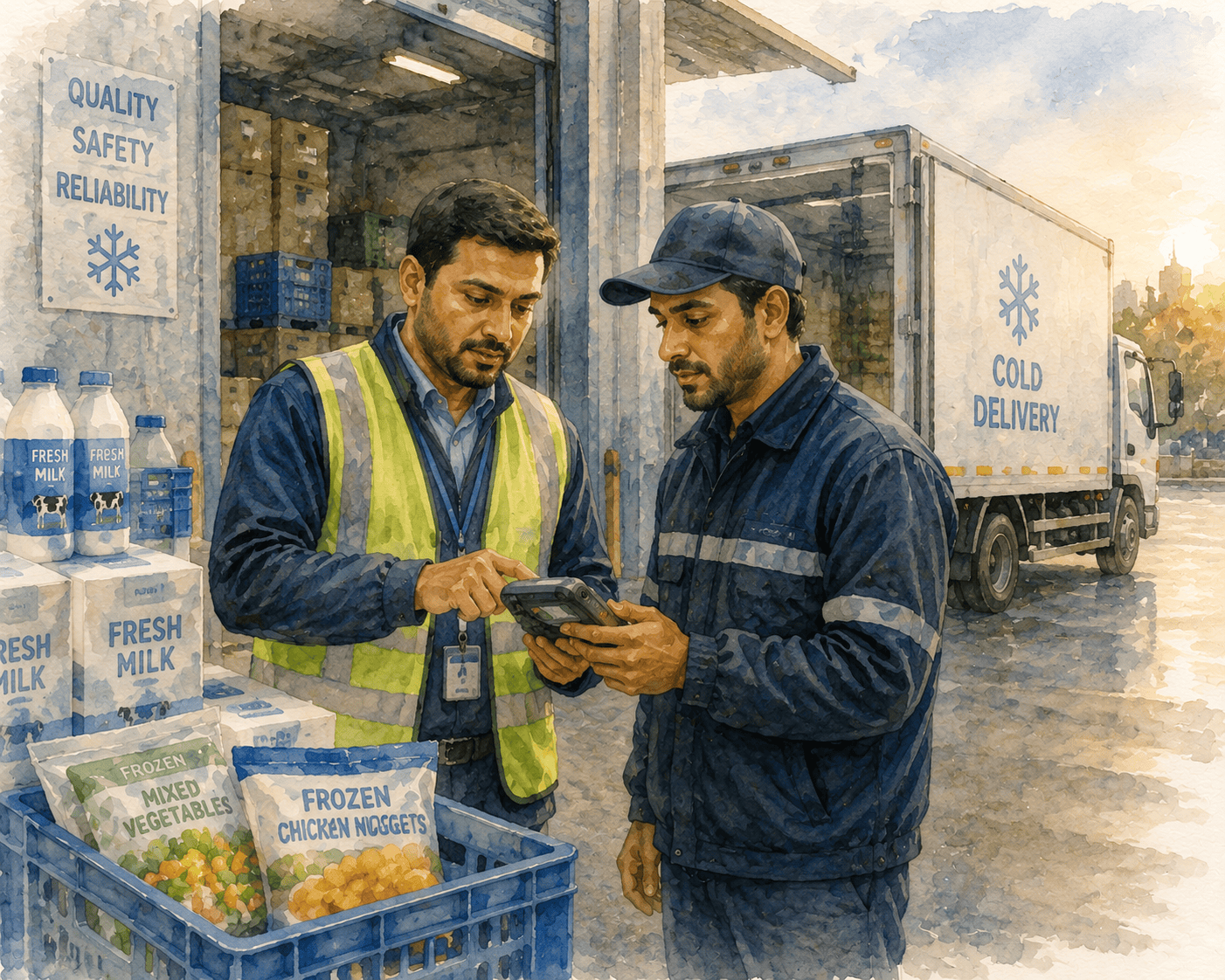
This is unglamorous work. It's also the part that determines whether an AI recommendation is something a planner trusts and acts on, or something they quietly override every week because it keeps missing what's obvious on the floor, in the cold store, or on the road.
Building this without a six-month data project
The instinct for a lot of scaling F&B distributors, dairy companies, and frozen food brands is to assume this level of integration means a long, expensive data project before AI can even start. It doesn't have to.
This is closer to how we think about it at Hopnet. Rather than asking F&B businesses to replace their ERP, WMS, or spreadsheets, we work inside what's already there, structuring fragmented and manual data as part of the build itself, and connecting it into a live view that tracks batch age, cold chain status, in-transit position, and delivery exceptions alongside stock levels. That's the difference between a dashboard that reports what happened and a system that flags a batch nearing expiry, a cold chain break, or a shipment running late, before it turns into a write-off or a missed delivery window.
The takeaway
AI can meaningfully cut waste and improve service levels for F&B distributors, dairy companies, and frozen food brands alike, but only once the data underneath it reflects what's actually happening across the warehouse, the cold chain, the road, and the shelf. Get that bridging right first, and the forecasting, replenishment, and exception alerts built on top of it become something teams can actually trust.
Scaling a food, dairy, or frozen distribution business and want a clearer view across your warehouse, fleet, and sell-through data? Connect with Hopnet for a free strategy session and a roadmap tailored to how your supply chain actually runs today.